In the global landscape of cultural tourism and World Music in 2026, the quest for authentic sonic expressions and ancestral polyrhythms captivates an ever-expanding audience of music lovers and ethnomusicologists. At the heart of West Africa’s artistic vitality, traditional music and rhythms of Benin represent a creative reservoir of unmatched variety and emotional power. As the birthplace of Vodoun culture and the home of international music icons such as Angélique Kidjo and the Tout-Puissant Orchestre Poly-Rythmo de Cotonou, Benin resonates with sacred instruments, royal court drums, and ceremonial chants from South to North. Through this comprehensive guide, let the pulse of the drums carry you into the fascinating world of Beninese soundscapes.
1. Spiritual Foundations of Traditional Music and Rhythms of Benin
The founding principle behind traditional music and rhythms of Benin lies in the inseparable connection among music, dance, and spirituality. In Beninese cosmogony, sound is far more than entertainment: it is the vehicle connecting the visible realm of the living with the unseen world of ancestors and deities. Discovering traditional music and rhythms of Benin means recognizing that every cadence, drumbeat, and flute melody carries a sacred intention, prayer, or historical narrative designed to uphold social balance.
2. Tchinkoume, Sato, and Southern Percussion Diversity
Southern Benin boasts an impressive rhythmic diversity tied to royal ceremonies and community celebrations. Among the core staples of traditional music and rhythms of Benin, Tchinkoume (originating from the Savalou region) uses water-immersed gourds to create deep, hypnotic bass tones. The Sato, a monumental drum standing over two meters tall, is played collectively during royal funeral rites. Another prominent cadence is Zinli, a court rhythm once reserved for Abomey kings, now featured at major cultural celebrations.
3. Northern Royal Soundscapes: Kakaki and Fulani Rhythms
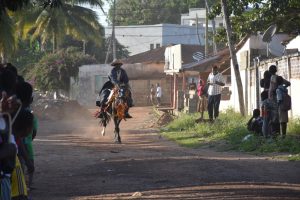
Traveling north toward the foothills of the Atakora chain and mountains in Benin, the auditory landscape of traditional music and rhythms of Benin undergoes a striking transformation. The North echoes with the sounds of the Kakaki, a long brass ceremonial trumpet blown during the Gaani festival in Nikki. Bariba and Fulani communities showcase polyphonic singing alongside gentle percussion rhythms (Tembe), honoring equestrian bravery and pastoral heritage.
4. Sacred Instruments: Sato, Houngan, and Gankogui
The instrumentarium of traditional music and rhythms of Benin reflects remarkable artisanal mastery. The forged iron double bell (Gankogui) sets the master tempo—the foundational backbone of complex polyrhythms. Houngan, Hungunto, and Klassou drums, carved from dense hardwoods and topped with antelope or deer skins, are crafted by master woodworkers and sculptors. This craftsmanship displays the same technical precision seen in traditional textiles and Kanvo of Benin.
5. Influence on Contemporary Global Music
The enduring strength of traditional music and rhythms of Benin rests in its capacity to fertilize global music genres. Afrobeat, Jazz, Salsa, and modern Funk draw direct stylistic roots from Beninese ritual structures carried across the Atlantic. Today, Benin’s vibrant youth scene blends Gogohoun and Sato with electronic beats and urban genres, building a bold bridge between ancestral heritage and modern sounds.
6. Digital Preservation of Sound Heritage via the Echostar Project
A vital challenge facing traditional music and rhythms of Benin is archiving and protecting rare field recordings and oral traditions before elder bards pass on. Utilizing tools from the digitalization of art and crafts in Benin and supported by the international platform of the Echostar Project, audio archiving and rhythm mapping projects are safeguarding this intangible heritage while connecting local master musicians with global audiences.
7. Musical Tourism, Festivals, and Hands-on Workshops
For travelers eager to experience the raw vibration of traditional music and rhythms of Benin, the national cultural calendar offers flagship events such as the International Vodoun Festival and the Gaani Festival. Immersive travel itineraries offer drumming and dance workshops where visitors learn sacred steps and feel rhythmic energy firsthand, complemented by tastings of traditional gastronomy of Benin during evening gatherings.
8. Semantic Optimization and SEO Value of Musical Heritage
Integrating the focus keyword traditional music and rhythms of Benin into your content strategy serves as a high-value magnet for culture enthusiasts and ethnomusicology researchers. By publishing well-researched guides, audio clips, instrument histories, and profiles of master drummers, you establish your platform as an authoritative cultural hub while raising organic search rankings.
Conclusion: Join the Dance of Beninese Drums
In conclusion, the universe of traditional music and rhythms of Benin is an ongoing celebration of life—a sacred dialogue linking body, drum, and spirit. Listening to these ancient rhythms means vibrating with the heartbeat of West Africa and experiencing the creative vitality of a proud culture. On our tourism platform, we curate thematic musical journeys and masterclasses with traditional drummers to give you an unforgettable sonic adventure.