Benin, a small West African country by size, is a true treasure trove of cultural diversity, and nowhere is this richness more palpable than in its dances and rhythms. These artistic expressions are far more than simple entertainment; they are the reflection of a profound history, ancestral beliefs, and a contagious joy of life. Their appeal is universal, captivating anyone who experiences them.
The Infectious Energy of Beninese Dances
Benin’s dances are a whirlwind of energy and color. They are characterized by vibrant movements, often rooted in rituals and celebrations. Each ethnic group has its own unique styles, steps, and deep meanings.
The southern region of Benin features an especially rich repertoire of dances that express cultural diversity:
- Agbadja
A popular dance practiced in the South, especially in the Mono and Couffo departments by the Mina and Adja peoples of Benin, Agbadja is a dance full of power and elegance, often performed during important ceremonies. Dancers, dressed in colorful traditional fabrics, display fascinating energy accompanied by the hypnotic beat of drums. It was also historically performed by the Ewe people of Togo and Ghana. - Zinli
Zinli is a graceful and regal dance originating from the Kingdom of Abomey. Often associated with ceremonies, it is one of the most popular dances in Benin. Characterized by melancholy and strength, it is performed with a lightness and flexibility that gives performers a majestic appearance. - Tchinkoumé
Linked to Vodoun deities, Tchinkoumé was once a ritual dance where body movements became a prayer and connection with the spiritual world. This festive and musical dance, from the Collines department and especially the Savalou region, is performed to the rhythm of percussion and scraped gourds called gota. - Ogbon (or Gbon)
The Ogbon dance, also known as Gbon, is a traditional Beninese dance from the Adja-Tado and Yoruba-Nago cultural areas. It is associated with the Vodoun religion, particularly the deities Heviesso (thunder) and Egungun (ancestors).
The Gbon is performed to the beat of a drum, accompanied by bells and rattles, and may also include the sounds of the Agbegan bell and the Agbeka. - Bolojo
Bolojo is a popular dance and music style among the Yoruba communities of Benin and Nigeria. It is often performed during folkloric events such as festivals and celebrations, especially during Guèlèdè performances.
In northern Benin, dances and rhythms differ significantly, inspired by the region’s own traditions and percussion styles. Among them:
- Tèkè
Tèkè is a dance symbolizing dignity, performed during royal enthronement ceremonies in the Baatonu cultural area (Borgou and Alibori departments). Also called the “stick dance,” Tèkè delights guests during joyful public festivities where caravaners express their happiness at reuniting after a long absence. - Tipènti
Tipènti is performed by men, primarily farmers, originally to celebrate the end of millet and sorghum harvests. It is danced during the final weeding session among the Otamari ethnic group in the Atacora department of northwestern Benin. - Batakari Dances
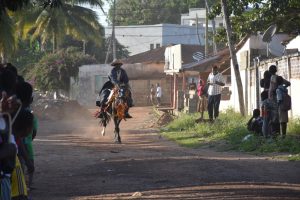
Northern Benin’s Batakari dances are more martial and acrobatic, featuring impressive performances that demonstrate the bravery and strength of warriors.
What unites these dances is their allure, authenticity, and intensity. They are not mere performances but lived experiences where the audience is often invited to participate, creating a rare sense of communion.
Benin’s dances are a powerful testament to the richness and vitality of African culture. Their emotional impact and unifying nature make them essential moments of joy for anyone seeking a deep and unforgettable cultural experience in the heart of West Africa.
Let yourself be carried away by the drums and the dance, and discover the enchanting soul of Benin.